field note
Chir pine at noon, mid-December
Year two on the hillside. The pines along the upper boundary in mid-December — bare understorey, cold sky, the kind of light that holds for one hour at noon.
· Sameer Jain · 1 min read
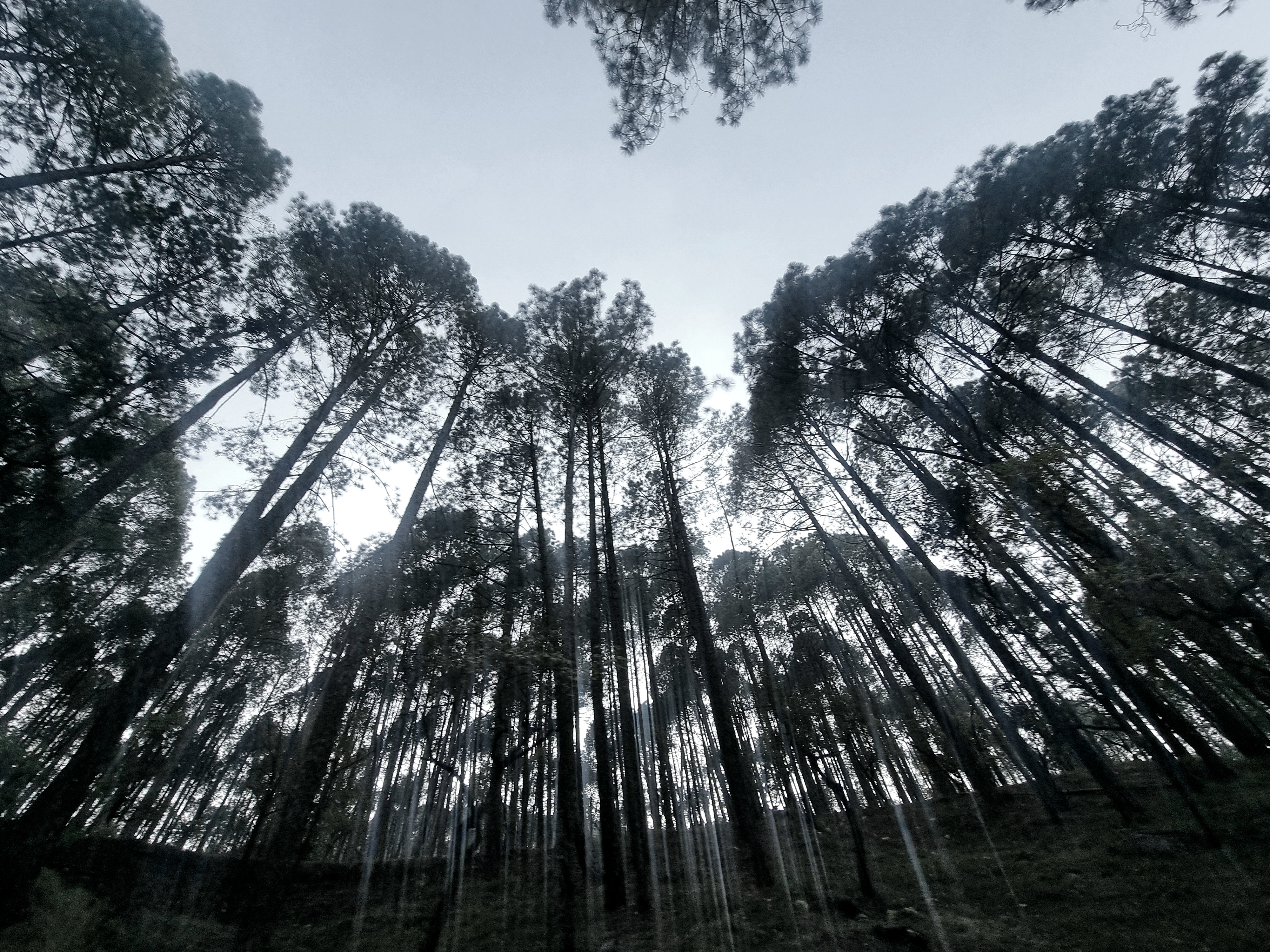
The chir pine (Pinus roxburghii) is the most common conifer in our upper boundary belt. We did not plant any of these; they were here a hundred years before the village was. They are tall, dry-fingered, and unfussy about everything except fire.
In winter their understorey thins out completely. The grasses go dormant. The leaf litter — six inches of needle mat — turns brick-red and gives off the particular dry scent that means there has not been rain for a while. By mid-December the sun reaches the forest floor for about an hour around noon. After that the cold returns.
These trees also drop tons of needle mulch each autumn. We rake it into windrows along the upper contour and let it compost into the soil over two seasons. It is part of how we feed the walnut block.
The forest, like the meadow, is a co-worker. We pay it nothing and it shows up every day.