Organic Fertilisers
Per-crop recipes from the elders, calibrated by today's soil tests.
Compost, vermicompost, jeevamrit. Walnut, plum, cherry, peach, almond, persimmon, kiwi.
A note from the family
We grow walnuts, plums, peaches and a slow life on a south-facing hillside in Chaptari — a hamlet of sixty-seven households in the upper Yamuna valley of Uttarakhand. The trees were planted in 2023. The terraces they sit on were carved into the slope by people who have lived here for longer than any of us can count.
I
Where
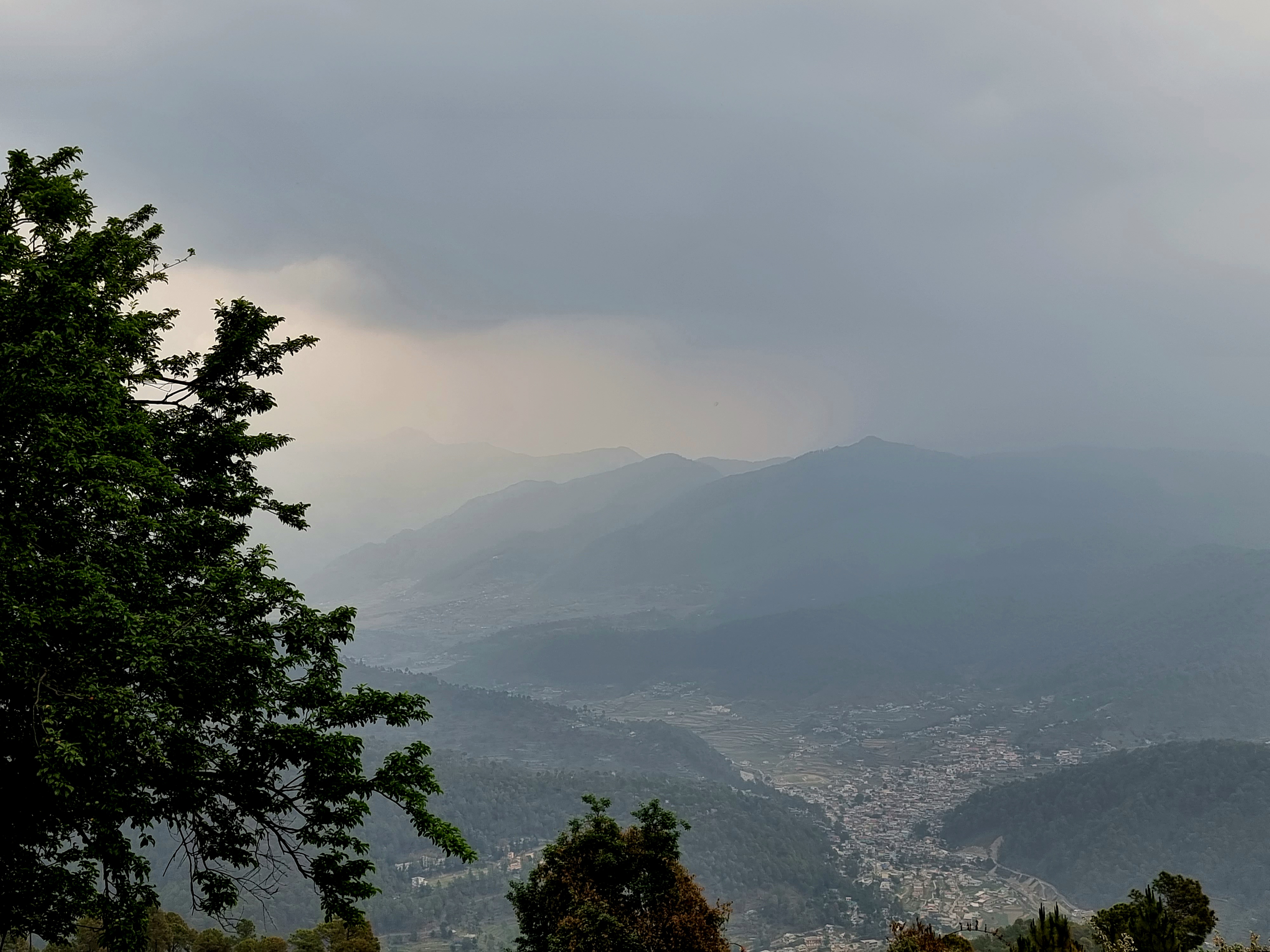
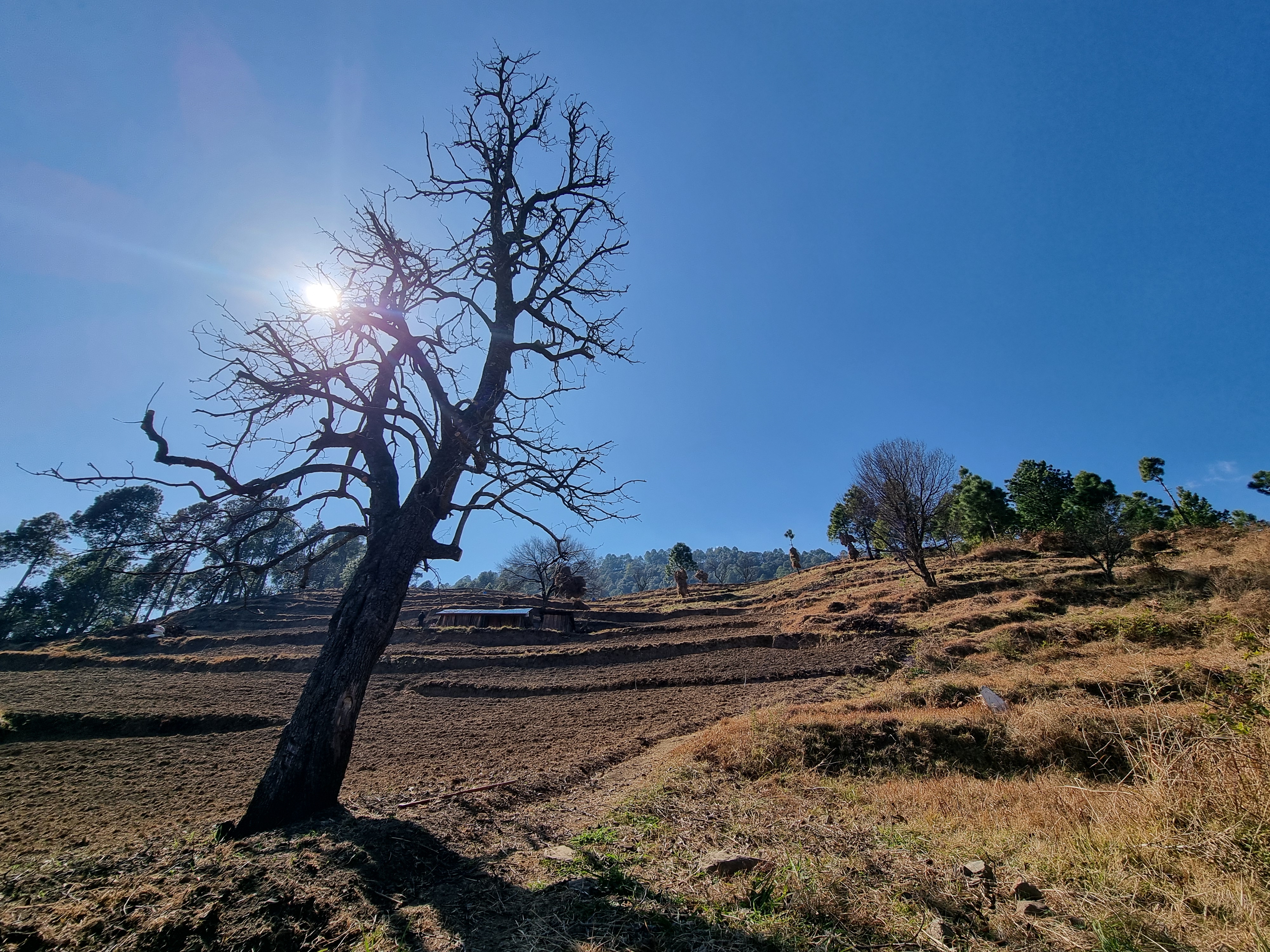
A hamlet of sixty-seven households in the upper Yamuna valley, on the road to Har Ki Dun. The Tons river runs below. Kedarkantha sits a day's walk north. The farm is on a south-southwest hillside, terraced into the slope by people who have lived here for longer than any of us can count.
II
Altitude
High enough that the air thins. High enough that walnut, apple and peach feel at home and grapes do not. Cold nights even in May. Snow on the ridge through March. The chill the trees need to set fruit, the cool that keeps the flavour, the slope that drains heavy rain — all of it follows from the altitude.
It is the high pasture, not the lowland orchard.
III
What grows
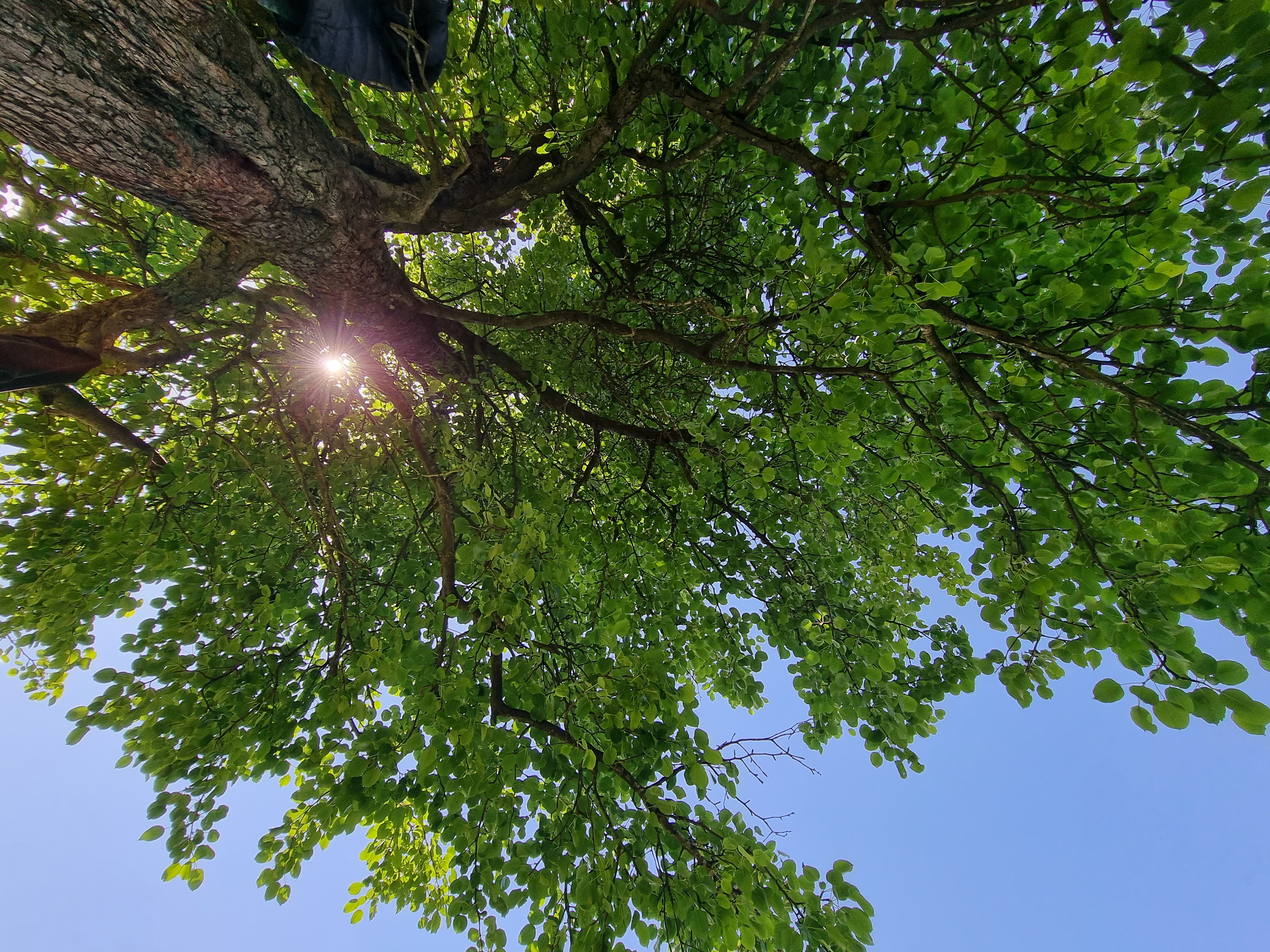
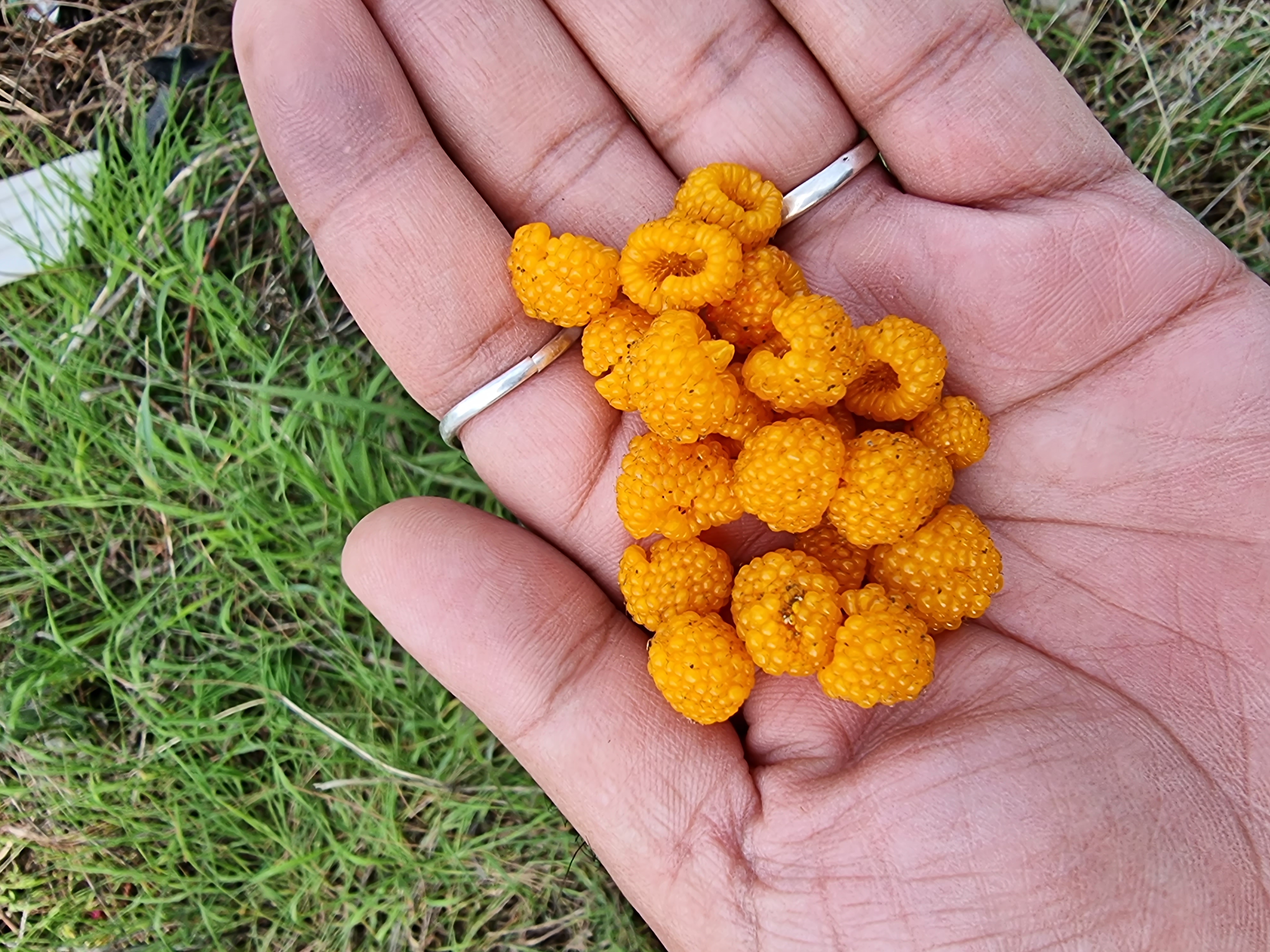
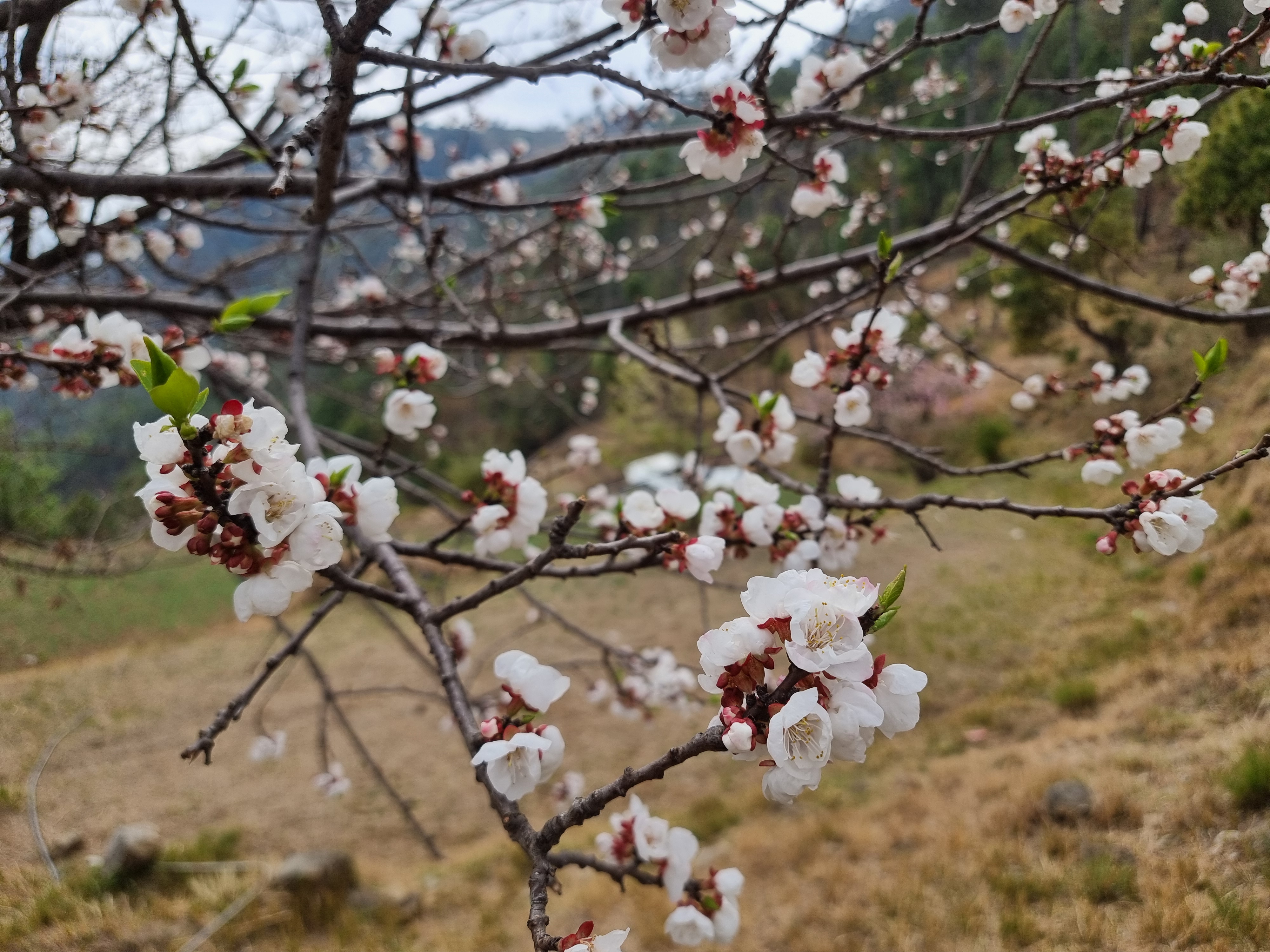
Around twelve hundred trees, planted in 2023, on terraces shaped before the trees. The walnut is the signature — Garhwali walnuts have a softness and a depth you don't taste in the imports. Stone fruit fills the calendar between the walnut harvests. Wild apricots and rhododendrons fill the meadows.
IV
The house
Garhwali pahari construction — stone walls, deodar timber, slate roof, a carved wooden tibari running across the upper storey. Earthquake-flexible and four hundred years older than concrete. The house is where the family stays; it's also where guests sit, eat and look out at the trees.
V
How
The trees feed on cow-dung compost, vermicompost and jeevamrit — the same recipes used here for a hundred years, with the soil tests of today on top. Water moves from spring lines into two stone tanks and then to the trees by gravity. Pawan walks the orchard at dawn; his son and a small team work the terraces.
VI
Why
Fruiting Acres is intended to outlive its founders. We are planting trees that will be most productive in 2040 and most beautiful in 2060. The estate is run like a small Bordeaux château or a single-estate olive farm — quiet, made-by-people-in-this-place, kept as a record of what one hillside in Garhwal can be.
We are planting trees that will be most productive in 2040 and most beautiful in 2060.
The estate, in one line
From the farm today
5 July 2026
The orchard is in good shape heading into peak monsoon, but the Sentinel-1 VV reading demands immediate attention.
88.0 mm rain in the last week · canopy NDVI 0.69
Read by the satellites overnight
The illustration and the real
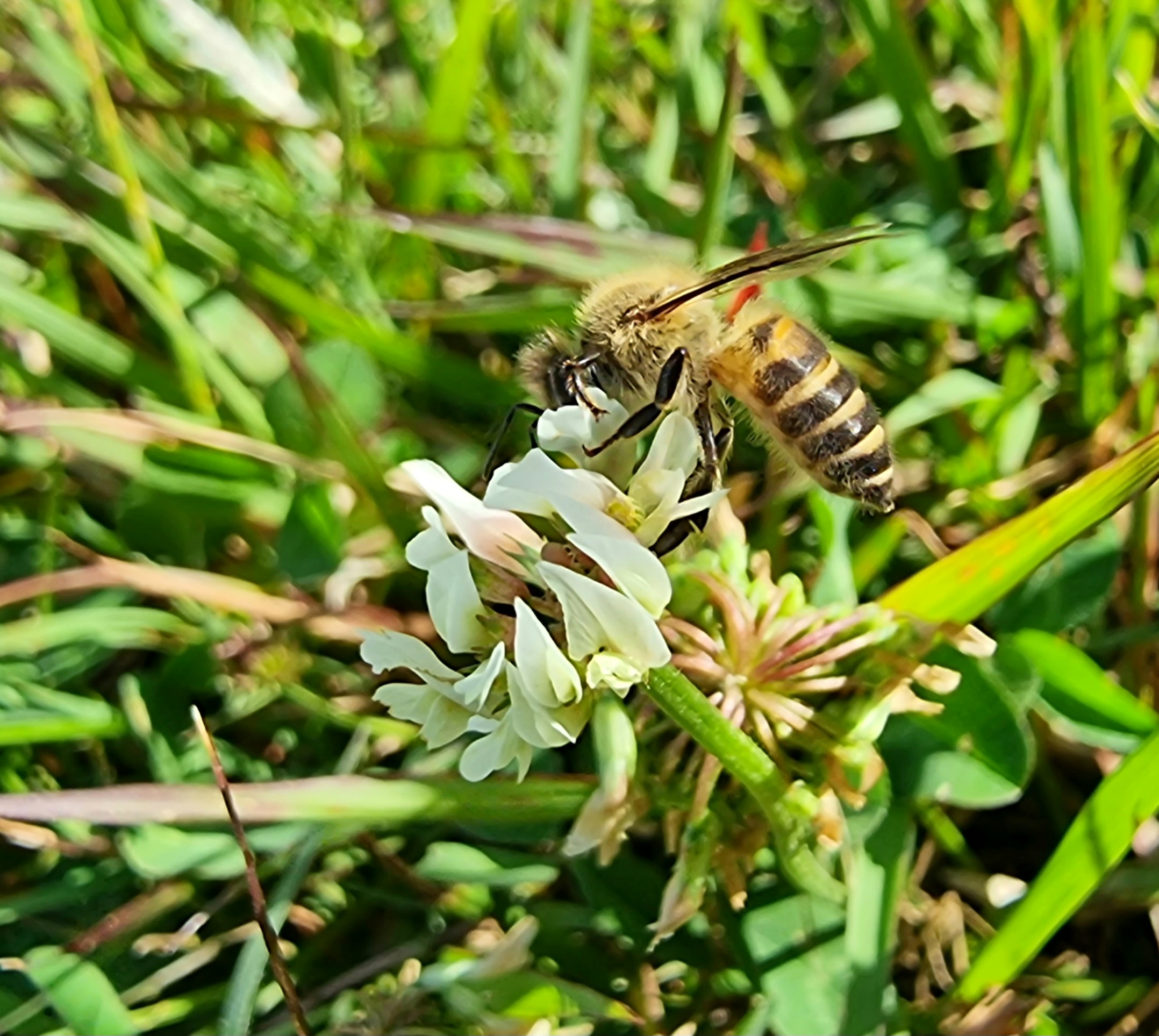
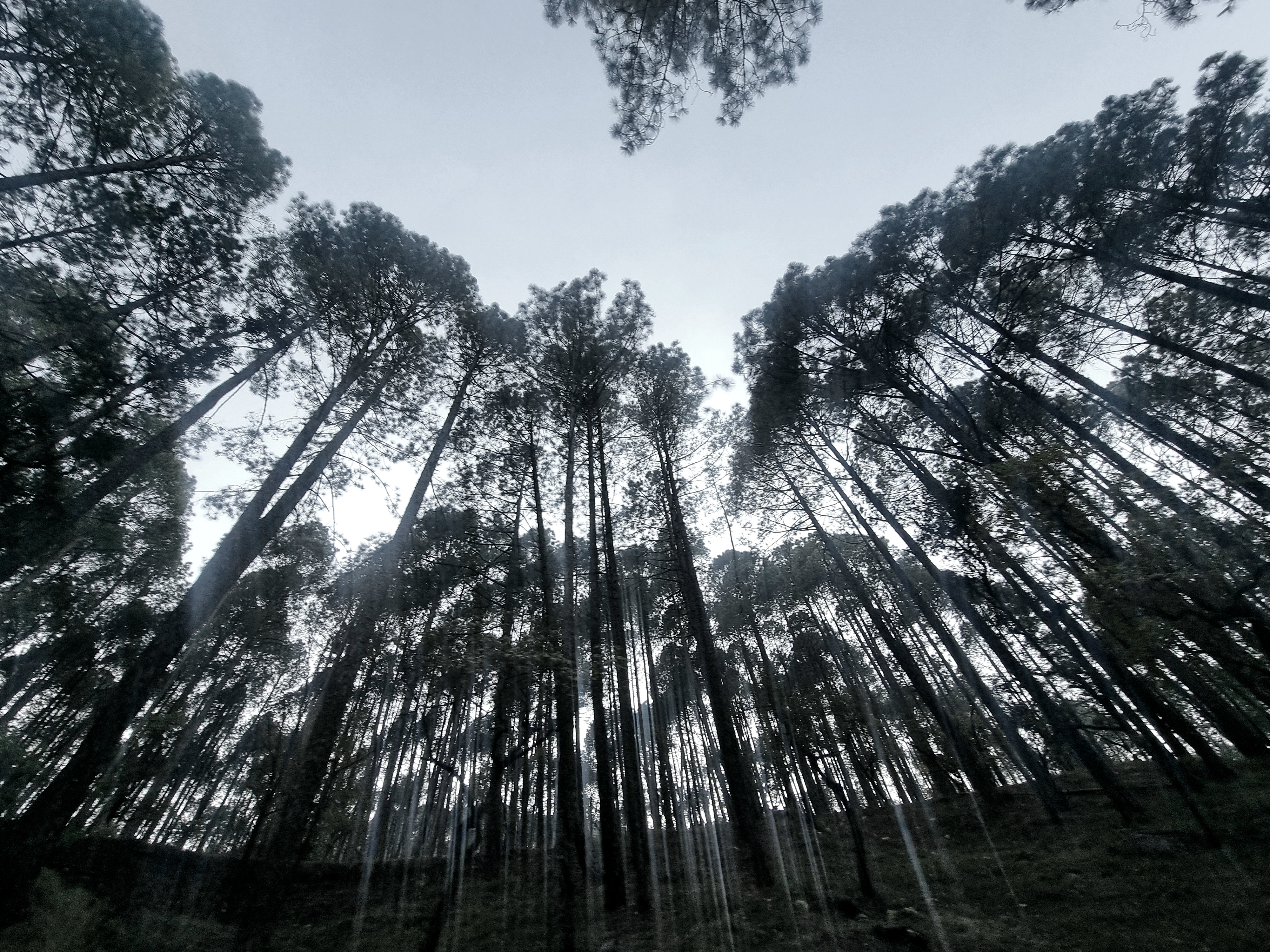
The daisies, the bees, the pines, the terraced slope — they are not decorative. They are at Chaptari, photographed by the family, sitting alongside the trees you'll come up to taste.
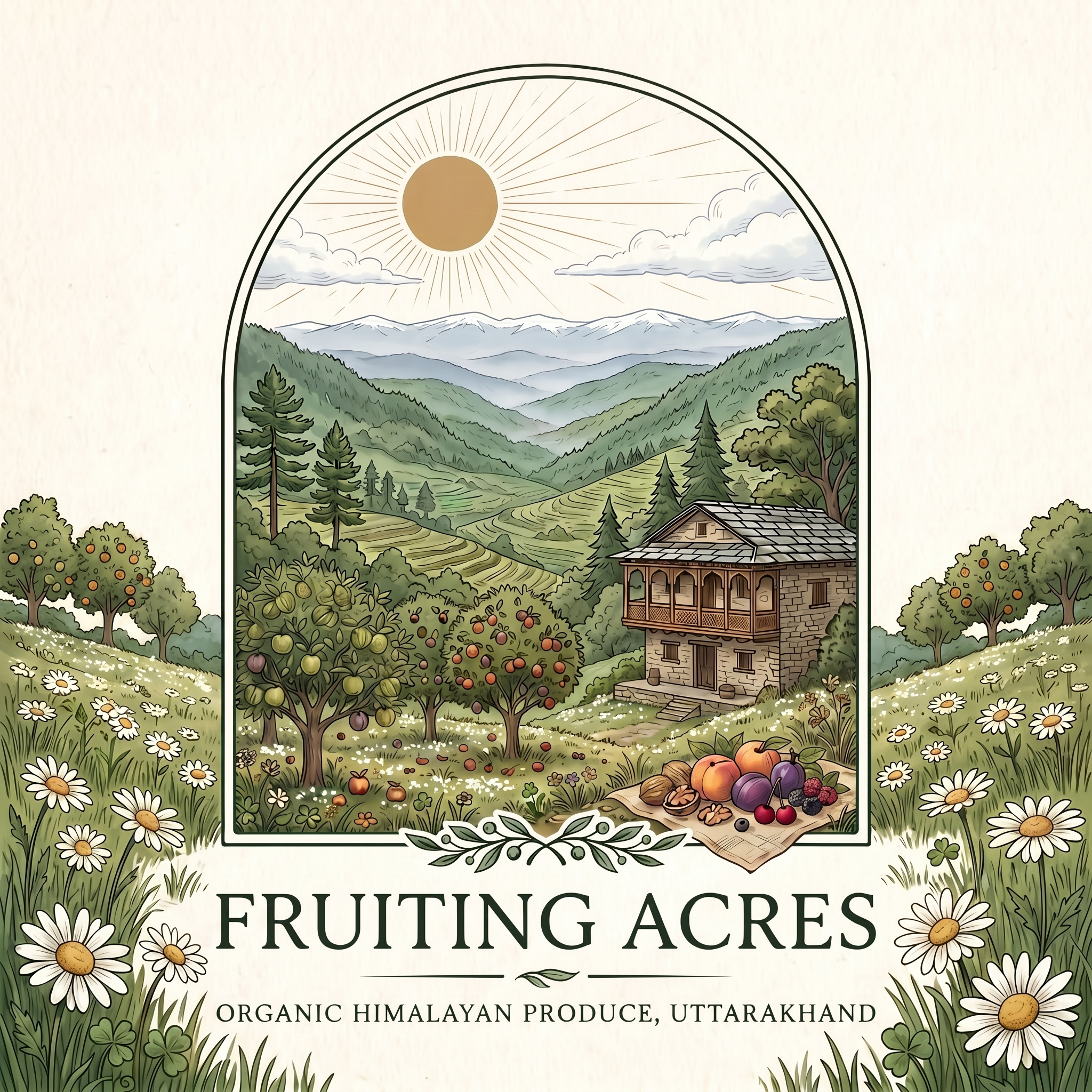
The illustration
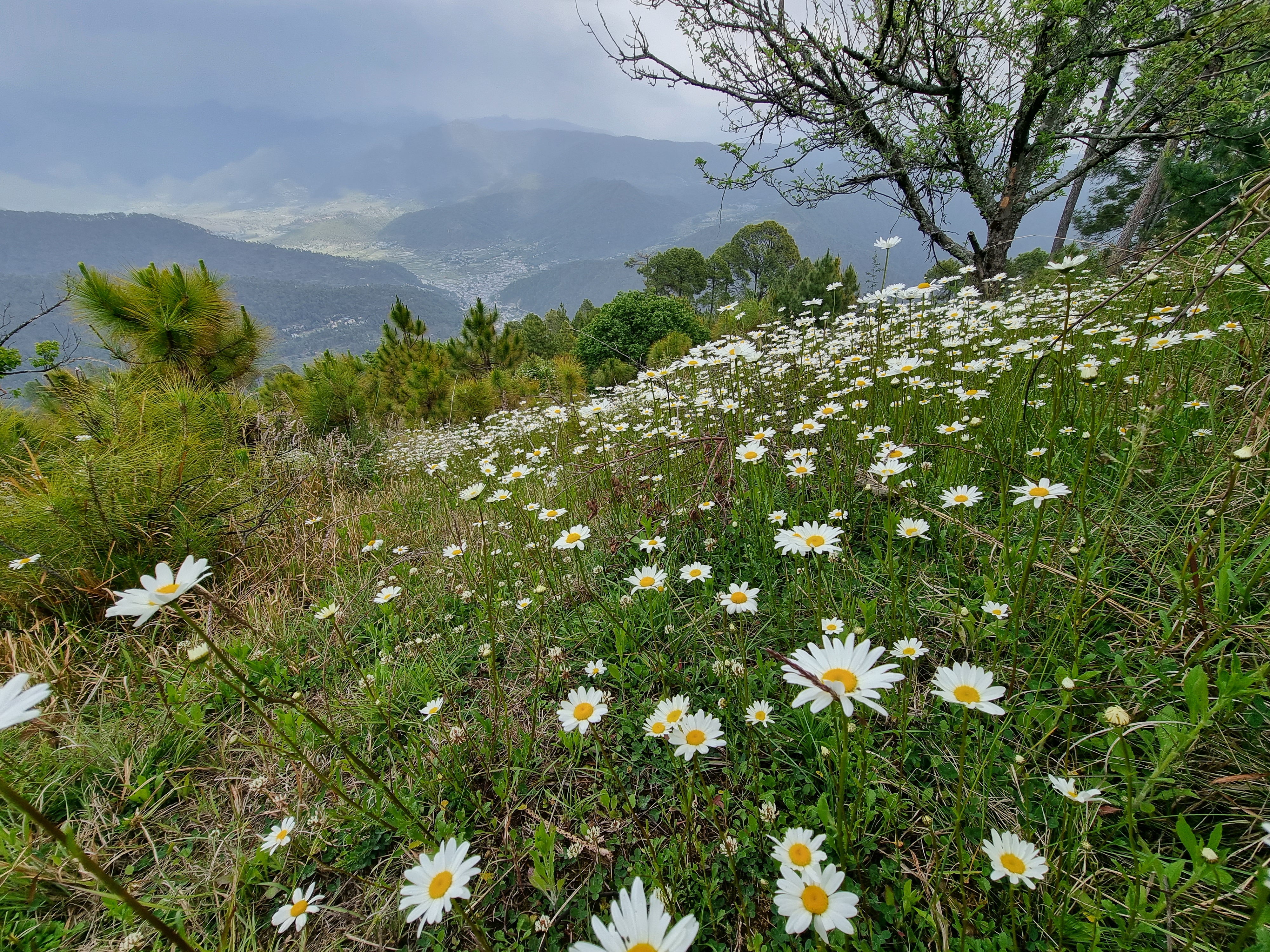
8 May 2023
The wildflower strip on the lower terrace. Daisies, clover and mountain mustard — kept unplanted because the pollinators that live here are what keep the orchard healthy.
The real thing
The hillside, three years
Eight photographs from the family album — May 2023 to March 2026 — arranged in the order they were taken. Drag, scroll or use the chips below to step through.
Explore
Six things about the farm, the valley and how we work — drawn into the master illustration. Filter by category, or pick a dot.
Hover or tap a pulsing dot
Season
South-southwest aspect — the slope catches the sun from late morning until the ridge cuts it off in the evening. About seven hours of direct light at peak season; the long shadows in early morning protect young leaves from radiation stress.
Quick jump
From the journal
Short entries from Chaptari — photographs, weather, what the trees did this week, and the slow arithmetic of chemical-free farming on a Garhwal slope.
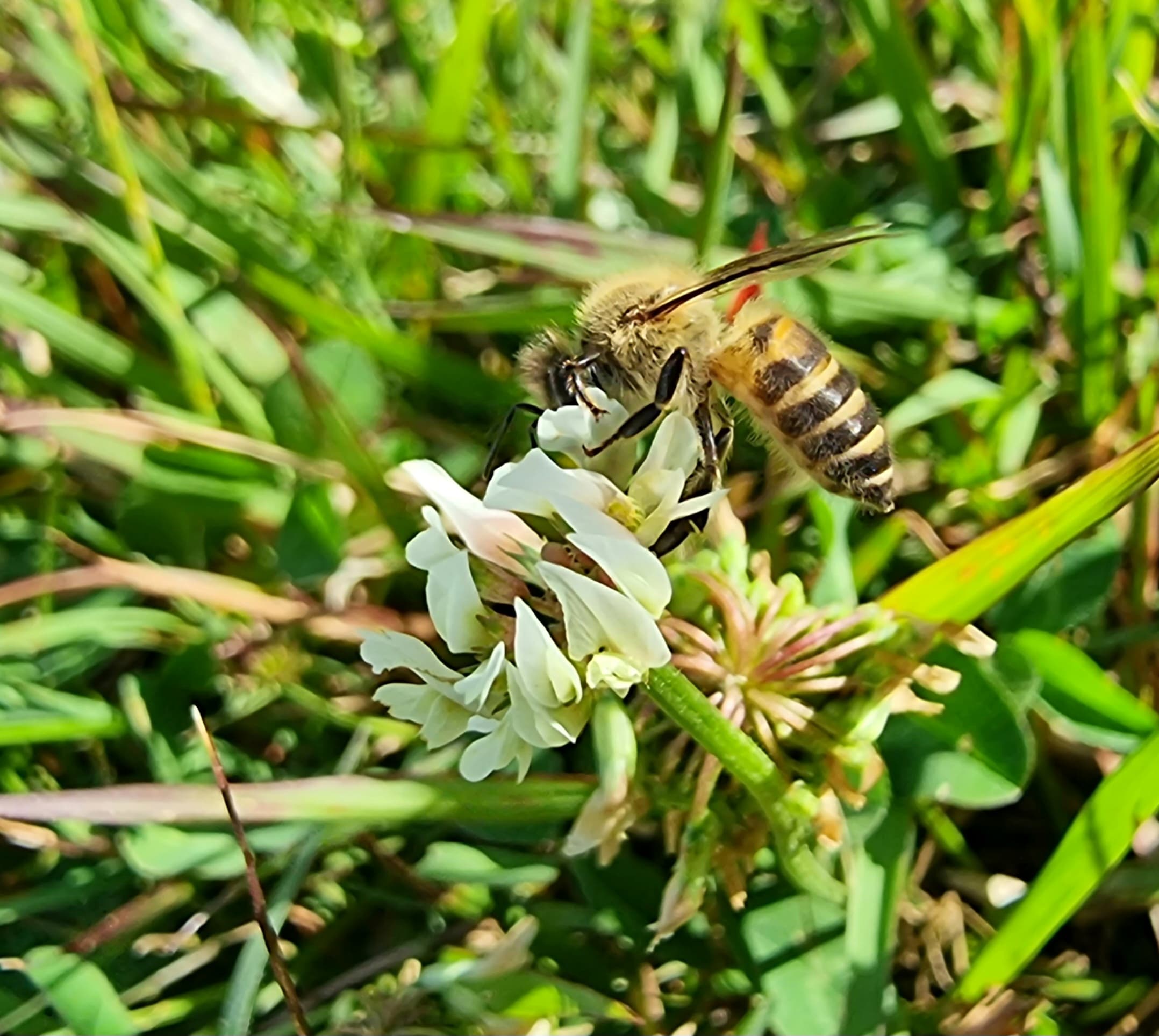
02 Jun 2026
An organic farm in the upper Yamuna valley explains, in detail, why it never sprays a chemical pesticide, herbicide or synthetic fertiliser — what it does instead, and what it costs.
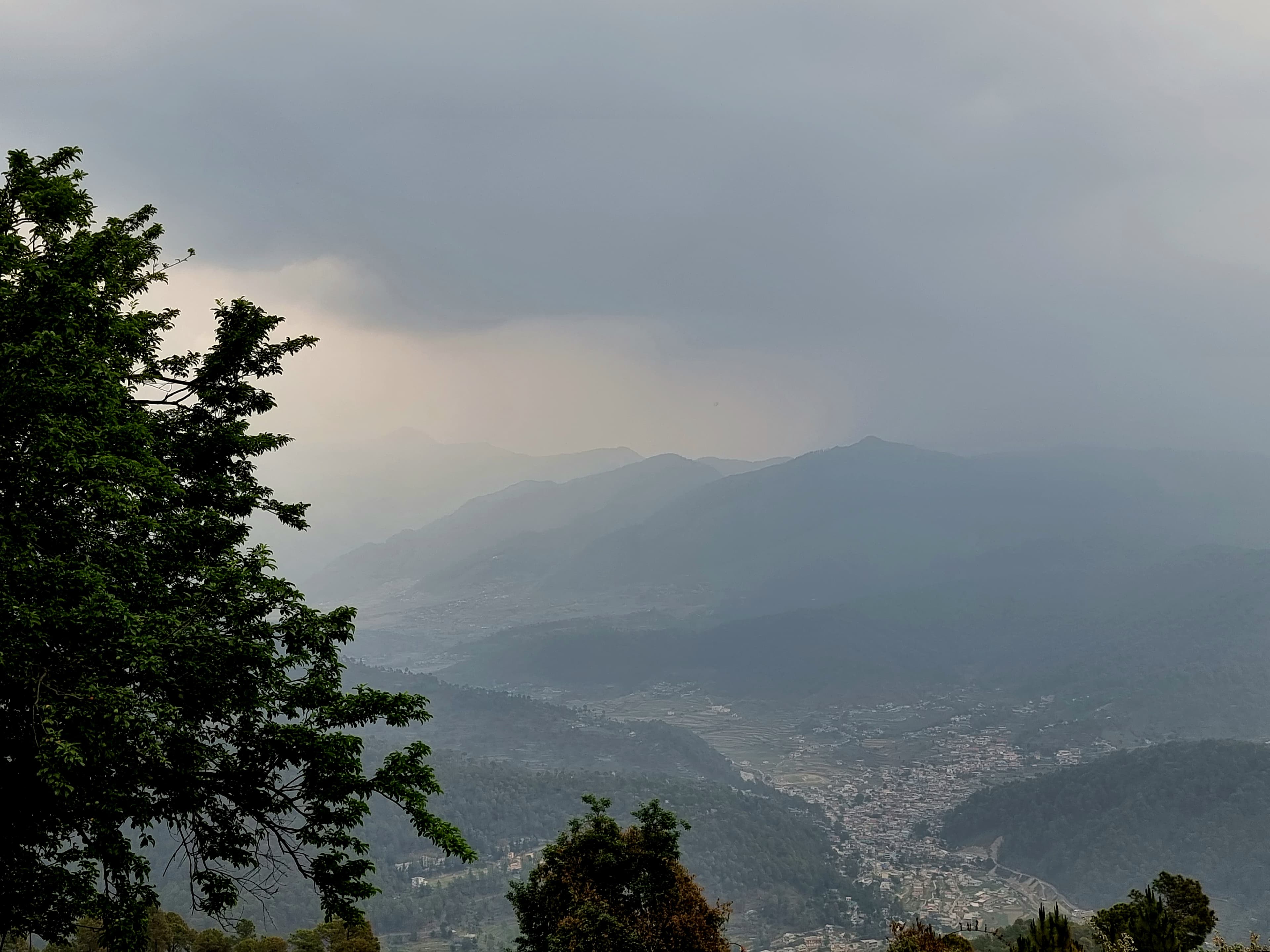
30 May 2026
We sit 480 km below a constellation of Earth-observation satellites that look at the hillside every few days. Here is what we ask them, how we make sense of the answer, and where the limits are.
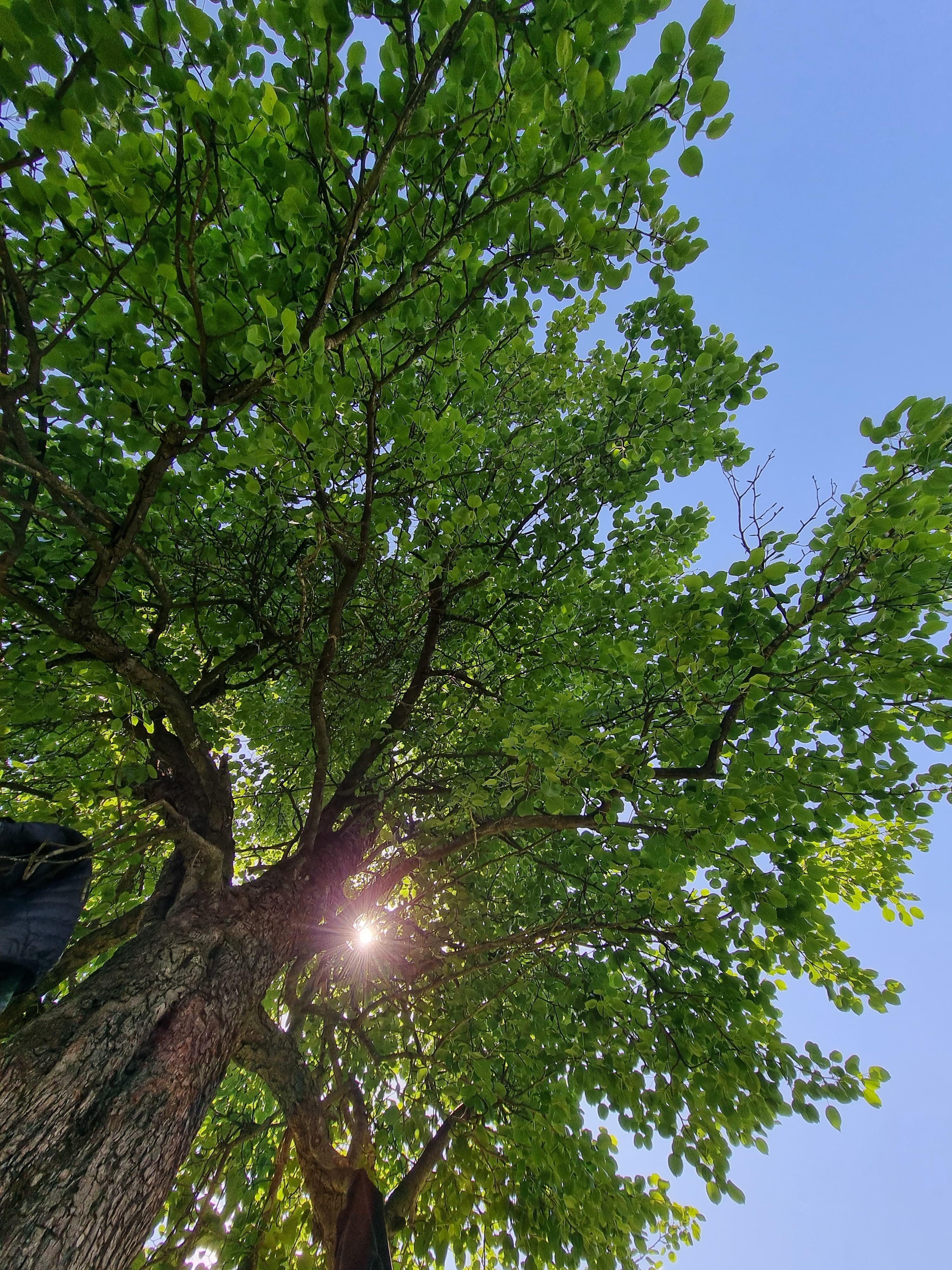
22 May 2026
Organic farming is widely misunderstood — even by people who eat organic. A working farmer in the Garhwal Himalaya goes through five common myths and what the practice actually looks like.
Inside the farm
We built them for ourselves first — Pawan, Siddharth and Sameer — and made them small, calm and bilingual-ready so the team can use them on a phone in the orchard.
Per-crop recipes from the elders, calibrated by today's soil tests.
Compost, vermicompost, jeevamrit. Walnut, plum, cherry, peach, almond, persimmon, kiwi.
Snap a photo. Get the cure.
AI looks at leaves and trunk, suggests an organic treatment from the recipe library or a verified custom one.
What to grow, where, and what it will earn.
Parcel-by-parcel crop plan, catch-crop suggestions between harvests, ten-year economics in INR.
What the satellites saw — read with morning chai.
Daily insight from IMERG, Sentinel-1, Sentinel-2, Landsat, ERA5, NASA POWER. One paragraph. Three actions.
For the family · For the team · For our guests
Subsidy applications, organic recipes, daily satellite reads, parcel-by-parcel planning. The whole farm, in one place, kept quietly by the people who run it.
Go Inside the Farm
Sign in with Google
Family and farm-team only. Get in touch if you'd like to visit, taste the produce, or stay.